
A low minimum order can reduce inventory exposure, but the smallest quoted number does not automatically create the safest production plan. Buyers still need to control fit, fabric, printing, labelling, sampling, quality expectations and total project cost.
A suitable low MOQ T-shirt manufacturer should offer a workable quantity while keeping specifications, approvals and production responsibilities clear. At JC Apparel, a typical starting MOQ is 50 pieces per color per style, subject to fabric availability, printing method, size breakdown and project specifications.
This guide explains how to evaluate a low MOQ unisex T-shirt manufacturer, prepare an effective request for quotation, assess samples, compare costs and reduce preventable production risk.
Let’s get into it.

1. Define Low MOQ by Style, Color and Size Breakdown
MOQ is the minimum quantity a manufacturer is prepared to produce under a particular set of specifications. It should always be read together with the style, color, fabric, size breakdown, printing method, labels and packaging—not as an isolated number.
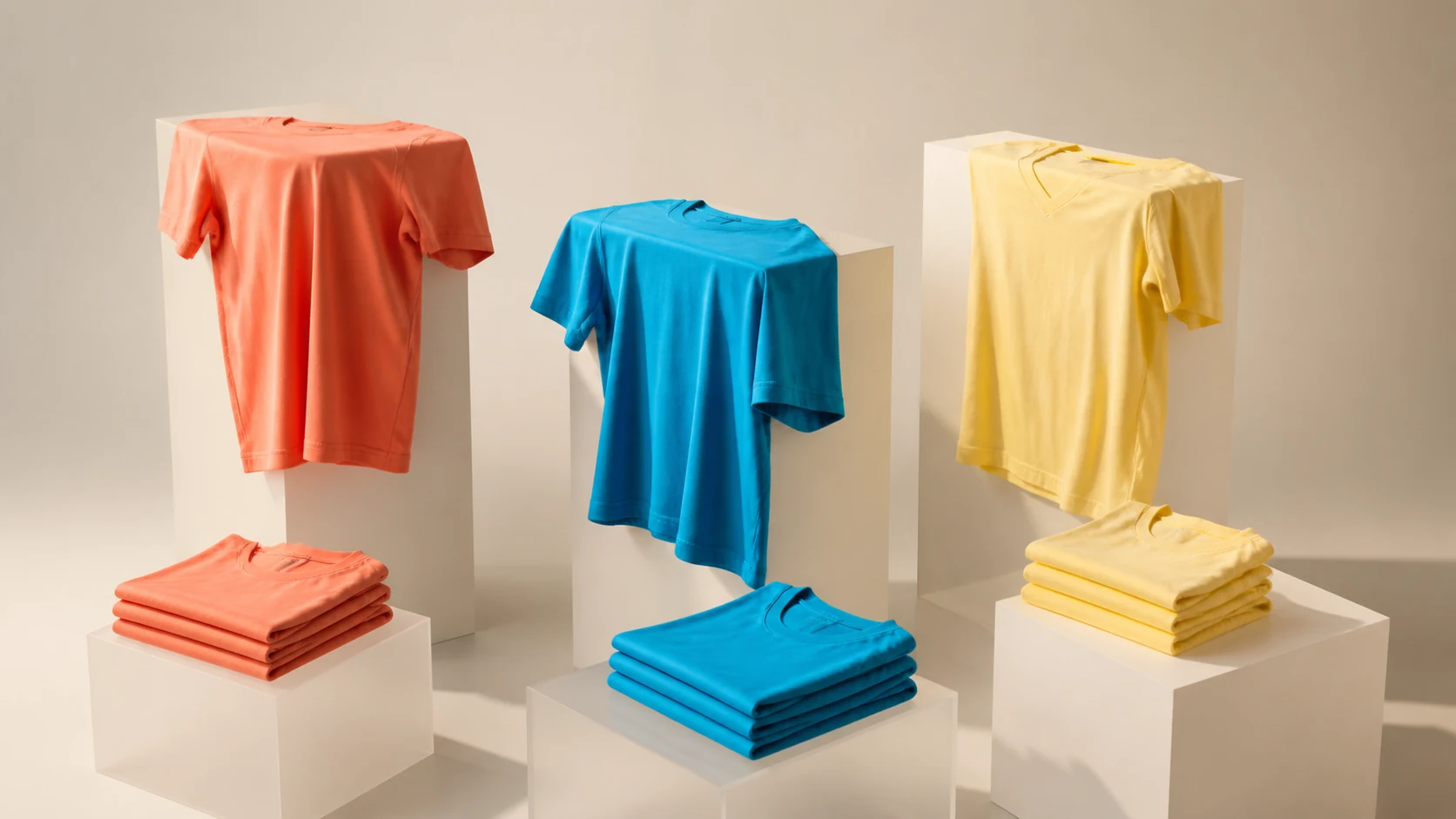
JC Apparel’s typical starting point is 50 pieces per color per style. Buyers can review the company’s custom T-shirt manufacturing options before submitting a project brief, but the final workable quantity must still be confirmed for the exact product.
For example, two colorways at the typical starting point would normally mean 100 pieces for that style. The permitted size split, fabric availability and customization details still need written confirmation. Never assume that 50 pieces can be divided across any number of colors, constructions or private-label components.
Low MOQ is most useful when a brand wants to:
- test demand before holding substantial inventory;
- launch a focused color range;
- validate a new fit or graphic direction;
- build an initial wholesale presentation; or
- reorder from sales evidence rather than forecasts alone.
Reducing the quantity does not remove development work. Pattern preparation, fabric sourcing, artwork review, sample construction, label setup and production scheduling may still be required. These activities are spread across fewer garments, so a small-batch T-shirt manufacturer may quote a higher unit cost than it would for a larger repeat order.
| Variable | What the buyer should confirm |
|---|---|
| Style | Whether different fits or constructions count as separate styles |
| Color | Whether the MOQ applies to every colorway |
| Sizes | Which size breakdown is accepted within each color |
| Fabric | Whether stock and custom-developed fabrics have different minimums |
| Printing | Whether artwork, color count, placement or setup changes the quantity |
| Private label | Whether labels and packaging have separate supplier minimums |
The practical goal is not to find the lowest number on a supplier list. It is to find a quantity that remains commercially and technically workable after every required element is included.
2. Build a Production-Ready Unisex T-Shirt Specification
A manufacturer can only quote accurately when the product has been defined accurately. A request such as “100 premium unisex tees with a logo” leaves too many decisions unresolved and makes supplier comparisons unreliable.
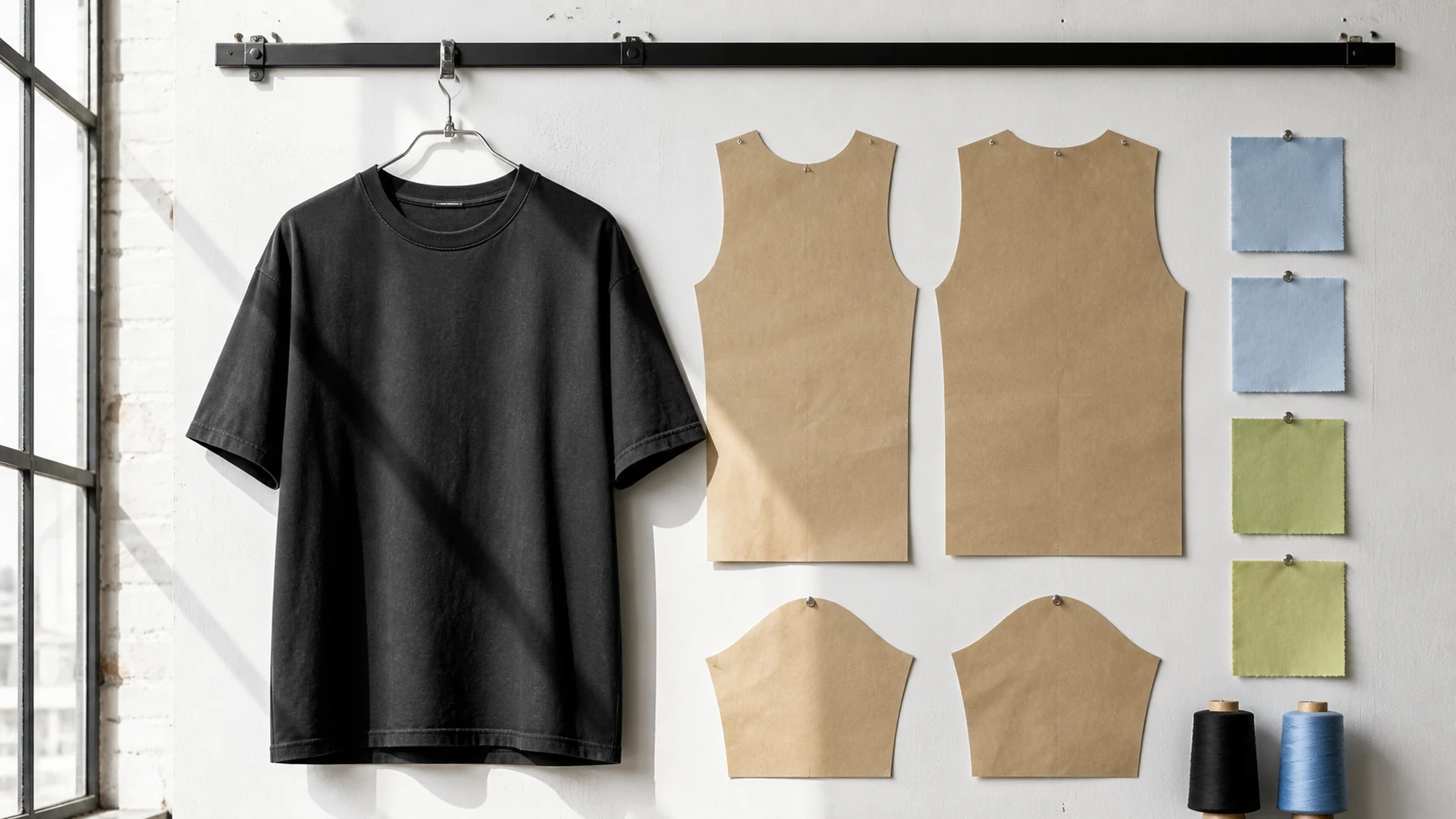
Your enquiry should identify:
- the intended silhouette, such as regular, relaxed, boxy or oversized;
- base-size measurements and points of measurement;
- planned size range and quantity by size;
- fabric composition, knit structure and weight direction;
- color references;
- neckline, sleeve, hem and seam details;
- artwork dimensions, placement and source files;
- main label, care label, hangtag and packaging requirements; and
- destination market and target delivery window.
“Unisex” is not a complete fit specification. The brand still needs to define shoulder width, chest ease, body length, sleeve proportion and grading direction. A fit that works for one customer profile may not match another, even when both products are marketed as unisex.
JC Apparel’s OEM and ODM manufacturing process shows the decision points from brief and feasibility review through written specifications, sampling and bulk production. If a complete tech pack is unavailable, organize the same information in a structured brief and label every unresolved item as a decision to confirm.
Printing should be treated as part of product engineering rather than a last-minute decoration choice. Screen printing and digital printing can be evaluated as project directions, subject to the artwork, fabric, color result, quantity and approved sample. Send the original artwork file and state its dimensions and placement instead of relying only on a garment mockup.
3. Use Sampling to Test Fit, Fabric and Decoration
A sample turns specifications into a physical garment that can be measured, worn and reviewed for construction, fabric hand and print appearance. It is a decision stage, not merely a miniature bulk order.
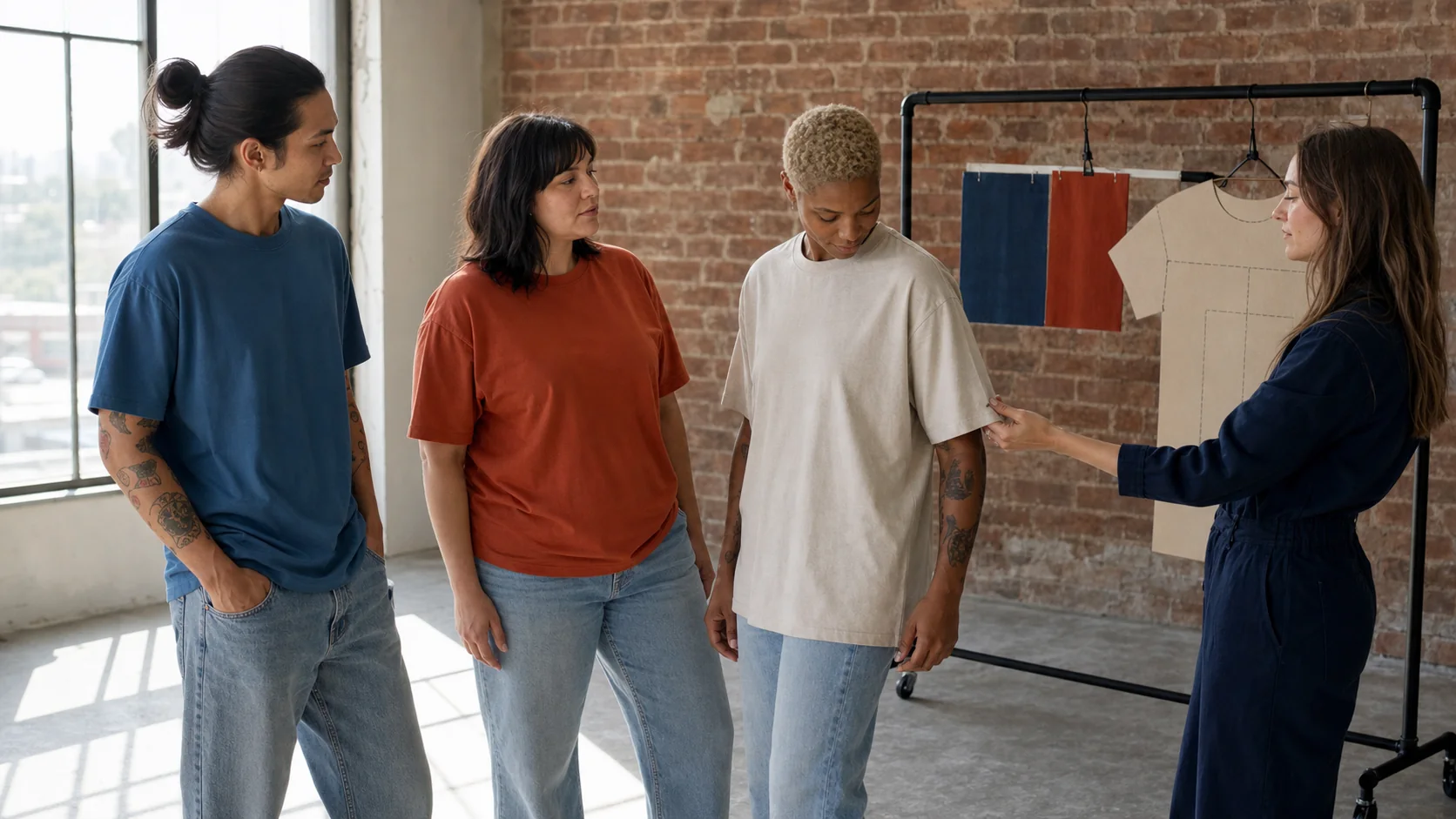
At JC Apparel, typical sample pricing is USD 40–90 per piece, depending on the design, fabric, trims and customization requirements. Shipping, development charges, revisions and any possible credit against a future order must be confirmed in the project quotation rather than assumed.
Sample development typically takes 14–30 calendar days, counted from confirmation of all sample details. Incomplete measurements, undecided fabric, missing artwork or changing label requirements can delay that starting point.
Review the sample systematically:
- Measure it using the agreed measurement method and tolerance.
- Evaluate the intended silhouette and ease across the brand’s target customer profile.
- Check neckline shape, shoulder position, sleeve proportion, body length and hem.
- Inspect seam appearance, stitching, symmetry and visible construction details.
- Confirm print dimensions, placement, color direction and surface appearance.
- Check label content, label position and packaging against the approved specification.
- Record every requested revision in one consolidated feedback document.
A sample does not prove that every bulk garment will be identical. It establishes an approved reference and helps both parties define what must remain controlled during production. The custom clothing manufacturing FAQ provides additional planning questions, but every project-specific answer should still be confirmed in writing.
If fit, hand feel, dimensions or print texture matter to the decision, do not approve the sample from photographs alone.
4. Compare Total Project Cost, Not Just Unit Price
Two low-MOQ quotations can show similar unit prices while covering very different work. A useful comparison separates the garment price from development, customization, packing, logistics and buyer-side import costs.
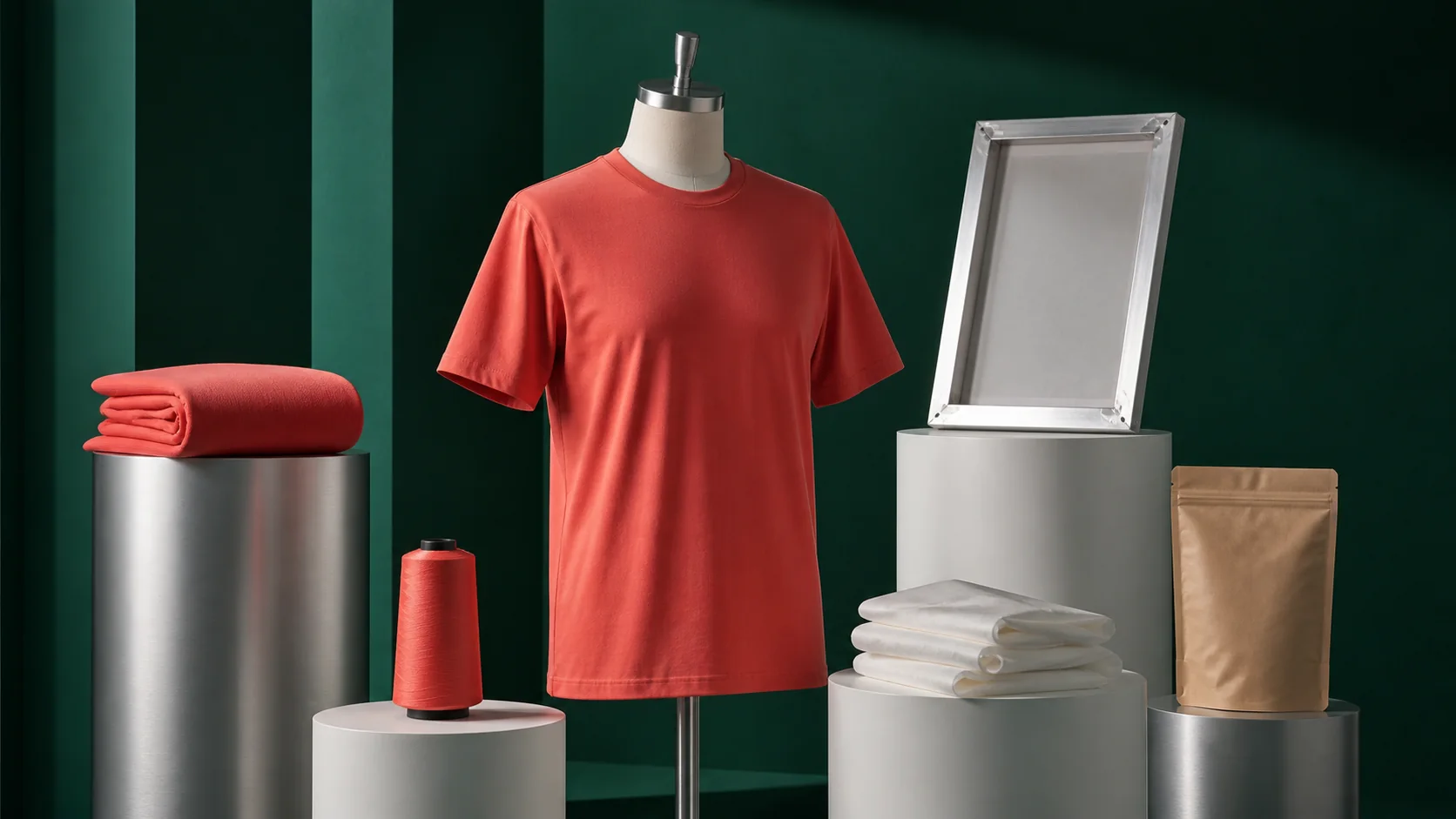
Ask each supplier to itemize or explain:
- MOQ by style and color;
- sample price and what it includes;
- fabric basis and whether availability has been confirmed;
- print or artwork setup charges;
- custom label, hangtag and packaging costs;
- revision or resampling charges;
- the bulk-production starting point;
- freight basis, destination and commercial terms; and
- exclusions, validity period and payment milestones.
When comparing a private-label T-shirt manufacturer with low MOQ, ask whether external label or packaging suppliers impose separate minimums. A garment MOQ of 50 pieces does not necessarily mean that every custom component can be purchased economically at the same quantity.
At JC Apparel, bulk production commonly takes about one to two months from receipt of the deposit, subject to confirmed order details, final sample approval, material availability and the production schedule. This is a production estimate, not a guaranteed delivery date. International transport, customs clearance and buyer-side delivery should be planned separately.
Normalize every quotation to the same specification. A stock-fabric T-shirt with a simple one-color print is not directly comparable with a different fabric, multiple print positions and custom packaging.
Low MOQ can control inventory exposure, but frequent small orders may increase development, freight and administration cost per garment. Compare the cost of one initial order plus a realistic reorder—not just the first invoice.
5. Set QC and Market Requirements Before Bulk Production
Quality expectations should be written before bulk production begins. Without an approved specification and inspection plan, phrases such as “premium quality” or “export quality” do not provide a measurable acceptance standard.
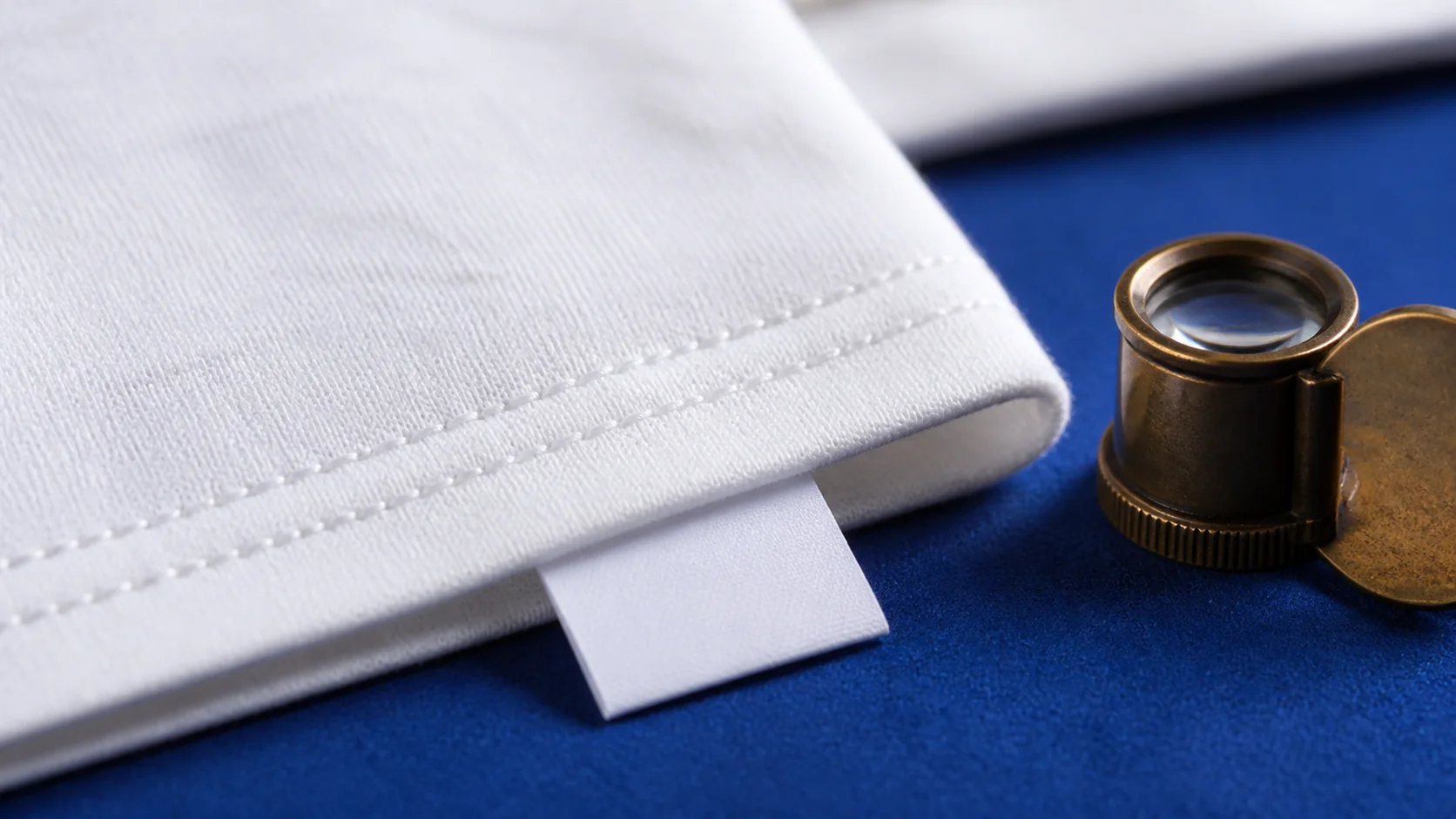
A buyer-approved T-shirt inspection plan may cover:
- the approved sample and current specification version;
- material, color and trim identity;
- measurement points and tolerances;
- workmanship and visible-defect definitions;
- print placement and appearance;
- label identity, content and position;
- garment quantity, folding, packing and carton marks; and
- correction and reinspection of nonconforming goods.
If the parties use acceptance sampling, they should specify the version, lot basis, inspection level, defect classifications and acceptance criteria for that order. ISO 2859-1:2026 provides AQL-indexed sampling schemes for lot-by-lot inspection by attributes; it does not create one universal apparel sample size or default AQL for every project.
Destination-market requirements should also be identified at the brief stage:
- United States: the FTC textile labelling guide explains that most covered textile products need fibre content, country of origin and the identity of the manufacturer or another responsible business. The FTC’s care-labelling guidance also says care instructions and warnings need a reasonable basis for the garment as a whole.
- Canada: the Competition Bureau’s textile labelling overview covers fibre information and dealer identity, and notes that fibre-related information must appear in both English and French. Quebec may have additional language requirements.
- Great Britain: GOV.UK textile labelling guidance says labels must show fibre content and covers products with components of different compositions. The page expressly applies to England, Scotland and Wales; Northern Ireland should be checked separately.
- Australia: the Australian mandatory care-labelling standard applies to clothing and other listed textile products, subject to stated exclusions, and allows English care instructions, the five international care symbols, or both.
These official pages are starting points, not a substitute for product-specific compliance review. The brand or importer should confirm the applicable rules, responsible party, testing needs, wording and label format for the exact product and destination market before production.
This article provides general manufacturing information and is not legal or product-compliance advice. Requirements should be confirmed for the specific product and destination market.
6. Verify the Manufacturer Before You Pay a Deposit
The final supplier decision should be based on evidence, not on an attractive MOQ displayed on a marketplace profile. This is particularly important for an overseas buyer evaluating a low MOQ T-shirt manufacturer in China.
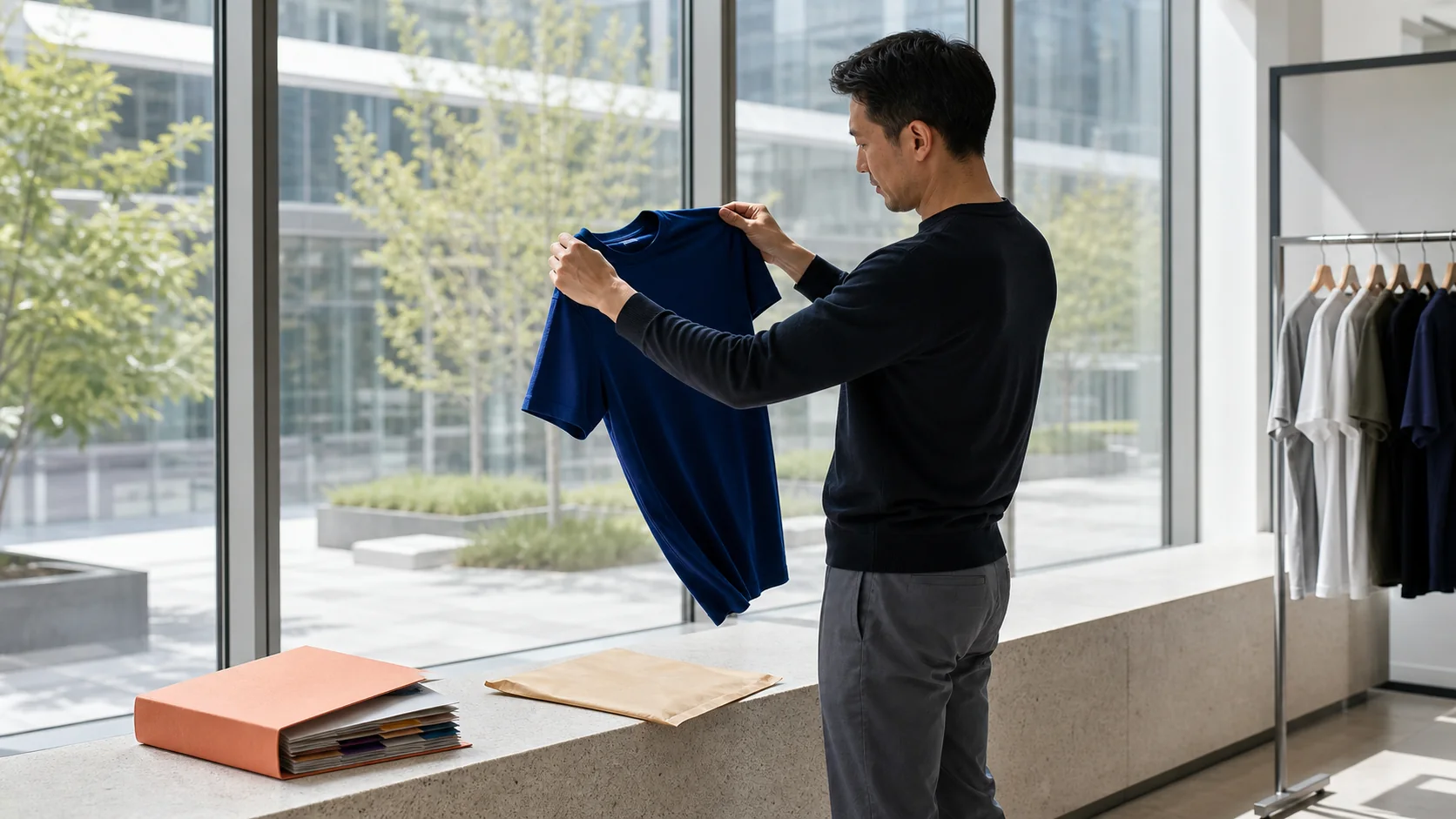
Before paying a deposit, verify:
- the legal company identity and payment beneficiary;
- whether relevant product experience matches the proposed T-shirt;
- the production route and any outsourced steps;
- who controls patterns, samples, artwork and specification revisions;
- material availability for the approved color and quantity;
- the production schedule and its assumptions;
- how nonconforming work will be reported and resolved;
- payment terms, quotation validity and delivery responsibilities; and
- whether requested evidence is current and applicable to the order.
JC Apparel is the abbreviated name of Dongguan Jingchen Clothing Co., Ltd., based in Dongguan, China, and its public company page states that it has operated since 2016. Buyers should begin with JC Apparel company information and then request evidence specific to the proposed style and order.
A remote review may combine company documents, a live video walkthrough, physical sample evaluation, project records that can legally be shared and a third-party inspection where appropriate. The OECD garment and footwear due-diligence guidance offers a government-backed framework for identifying and addressing labour, human-rights, environmental and integrity risks in supply chains. It is guidance, not a factory certification.
Warning signs include a supplier that refuses to define what the quotation covers, promises every customization at the same MOQ, requests approval against changing specifications or avoids written answers about material and production responsibilities.
A reliable small-batch unisex T-shirt manufacturer should be able to explain what is confirmed, what remains conditional and what the buyer must approve before the order advances.
Frequently Asked Questions
What is JC Apparel’s MOQ for custom unisex T-shirts?
A typical starting MOQ is 50 pieces per color per style. The final minimum depends on fabric availability, printing method, size breakdown, labels, packaging and other project specifications.
How much does a custom T-shirt sample cost?
Typical sample pricing is USD 40–90 per piece, depending on the design, fabric, trims and customization requirements. Buyers should confirm shipping, revisions, development charges and any bulk-order credit separately.
How long does T-shirt sampling take?
Sample development typically takes about 14–30 calendar days, counted from confirmation of all sample details. The schedule cannot begin reliably while measurements, fabric, colors, artwork or trims remain undecided.
Does a unisex T-shirt require a separate tech pack?
It requires a clear product specification, whether supplied as a formal tech pack or another structured document. “Unisex” alone does not define the silhouette, measurements, grading, materials, construction or artwork placement.
Is screen printing or digital printing better for a small order?
Neither method is automatically better. The decision depends on the artwork, number of colors, print area, fabric, required appearance, quantity, setup implications and approved sample result.
How long does bulk production take?
At JC Apparel, bulk production commonly takes about one to two months from receipt of the deposit, subject to confirmed order details, final sample approval, material availability and the production schedule. Shipping time is separate.
Conclusion
Choosing a low MOQ T-shirt manufacturer is a specification and risk-control decision, not simply a search for the smallest order quantity.
Before placing an order:
- confirm how the MOQ applies to each style and color;
- define the intended unisex fit and size breakdown;
- approve the physical sample against written specifications;
- compare total project scope rather than unit price alone;
- agree on product-specific quality and destination-market requirements; and
- verify the supplier and unresolved conditions before paying a deposit.
A well-defined small order gives both the brand and manufacturer a clearer basis for production and future reorders.
Ready to Start Your Unisex T-Shirt Project?
Send JC Apparel your fit direction, fabric preference, artwork, quantity per color and style, size breakdown, destination market and target timeline.
Dive Deeper Into Our Resources
- Review custom T-shirt manufacturing options.
- See the OEM and ODM manufacturing process.
- Browse the custom clothing manufacturing FAQ.